Your livestock,
understood.
cared for. Optimized.
Animal species documented by certified zootechnicians. General information, phase-by-phase tracking, pathologies with veterinary urgency, reproduction — everything the African livestock farmer needs to know, available offline.
Four tabs.
An informed farmer.
Each breeding sheet is structured in four views. From initial planning to emergency diagnosis — all information in the right tab, at the right time.
Planning,
acquisition
and African context.
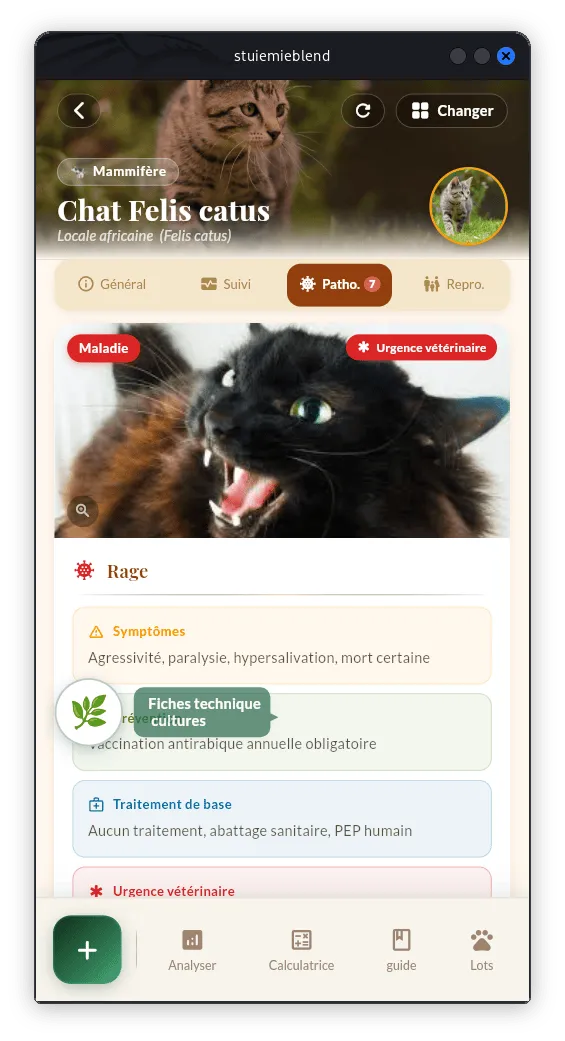
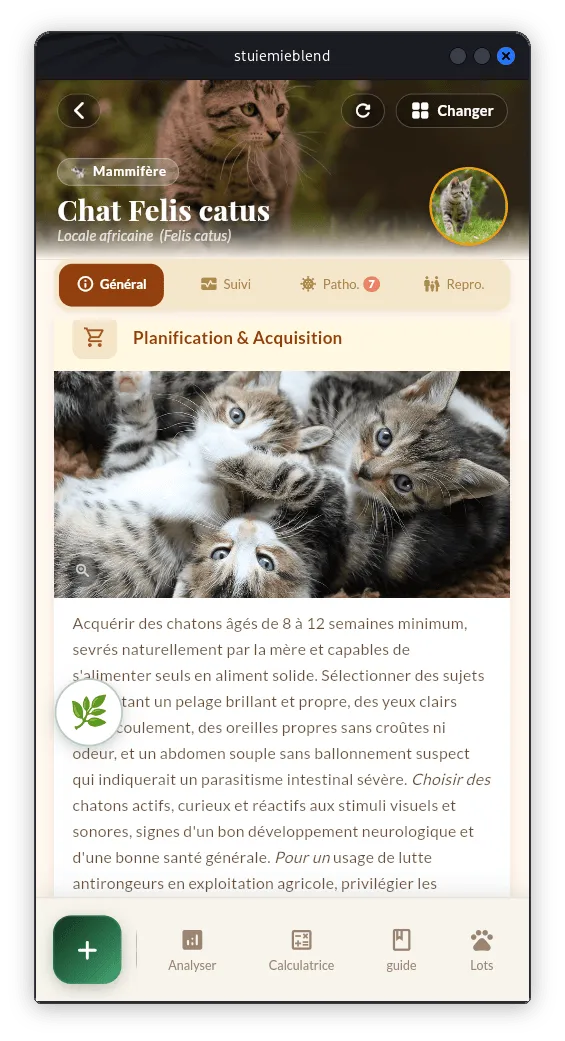
The first tab covers the species generalities: scientific name, local breed, economic importance, planning, and acquisition criteria. Rich Markdown content with formatted text, photos, and scientific references.
- Central Africa ContextImproved local breeds, high-plateau climatic constraints, input availability.
- Photos & Visual IDSpecies cover photo with circular ID badge and Change button.
- Planning & AcquisitionSelection criteria, recommended age of purchase, health checks to perform on purchase.
African Animal Encyclopedia
Mammals, birds,
fish.
All covered.
Each species benefits from a complete guide adapted to African issues: local breeds, tropical diseases, extensive and semi-intensive breeding practices.
Overview & Identification
Taxonomy, improved local breed, economic importance in Africa, production cycle, and local constraints. Illustrated Markdown content.
- Scientific name & classification
- Breeds adapted to tropical zones
- Local livestock performances
Phase-by-Phase Tracking
Numbered timeline with photos at each stage, timeframes, feeding frequency, and critical observations to monitor.
- Neonatal phase · D0 to D21
- Post-weaning · D49 to D90
- Growth · Finishing
Feeding & Rations
Nutritional needs by phase, energy needs, available local feed sources, and base ration composition.
- Crude Protein · Energy
- Minerals Ca/P · Vitamins
- Local fodder resources
Pathologies · Parasites · Zoonoses
Diseases documented with diagnostic photo, precise clinical symptoms, control method, and coded veterinary urgency level. Human-risk zoonoses flagged.
- Photo of the disease / visible symptom
- Symptoms · Organs affected
- Prevention · Recommended vaccination
- Base treatment · Products
- Urgency: low / moderate / urgent
- Zoonoses flagged (human PEP)
Reproduction & Genetics
Gestation period, lambing/calving, neonatal care, weaning, and local genetic selection criteria.
- Gestation period per species
- Postpartum care · Colostrum
- Sire selection criteria
Well-being & Prevention
Indicators of stress and animal welfare, recommended vaccination calendar, optimal density, and tropical housing management.
- Signs of well-being / suffering
- Vaccination schedule
- Housing hygiene · Litter
Tracking Tab — In Action
Every phase.
Every action.
At the right time.
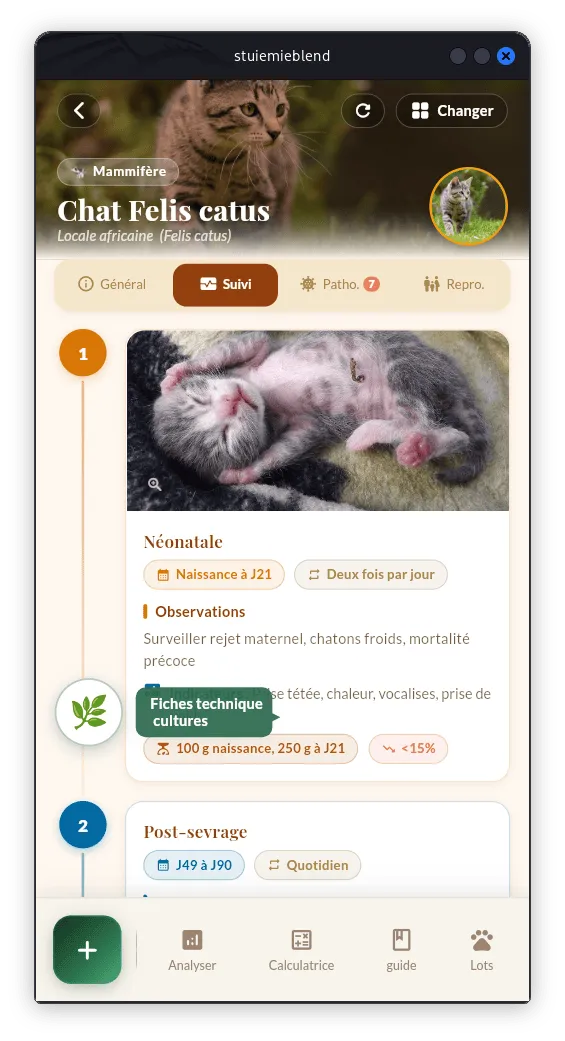
The Tracking tab displays a numbered timeline with photo per stage, precise timeframe, feeding frequency, and critical observations. You know exactly what to monitor and when to intervene.
Monitor maternal rejection, cold kittens, and early mortality. Check nursing, body heat, and vocalizations. Target weight: 100g at birth → 250g at D21. Acceptable mortality <15%.
Gradual introduction of solid feed. Weight control and feeding behavior. Monitor post-weaning diarrhea. Ad libitum feeding in active growth phase.
Ration adapted to growth energy requirements. Monthly deworming recommended. Bi-weekly weight checks and ration adjustments based on growth curves.
Rabies — Lyssavirus type 1
Aggression, progressive paralysis, hypersalivation. Certain death within 10 days post-symptoms. Fatal zoonosis subject to mandatory reporting.
- Mandatory annual rabies vaccination. Sanitary slaughter if infected. Immediate human PEP if bitten.
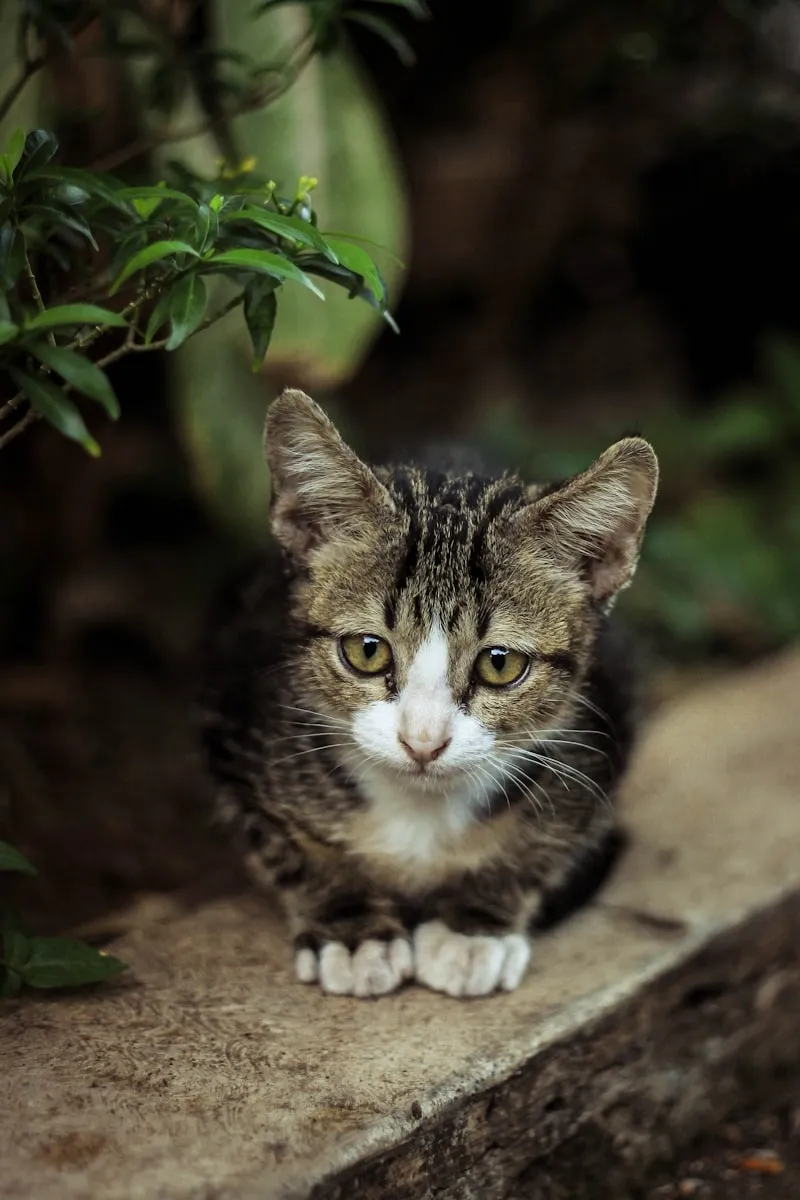
Panleukopenia — Feline Parvovirus
Vomiting, hemorrhagic diarrhea, high fever, deep depression. Mortality 25–90% in unvaccinated young animals.
- FVRCP vaccine mandatory. Intensive fluid therapy. Strict isolation. Bleach disinfection 1/30.
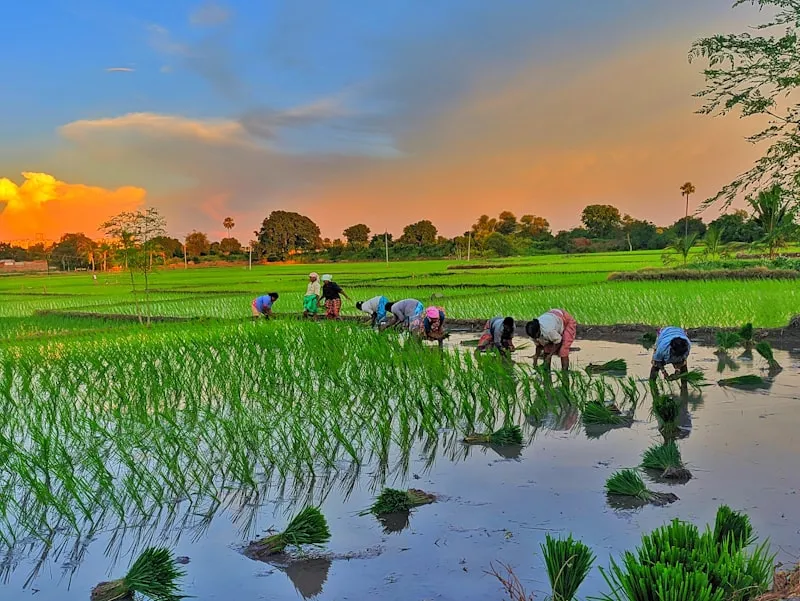
Ringworm — Microsporum canis
Circular alopecia lesions, gray crusts, moderate itching. Benign zoonosis, common in kittens.
- Local antifungal: Miconazole or Clotrimazole. Systemic Griseofulvin if extensive. Coat washing.
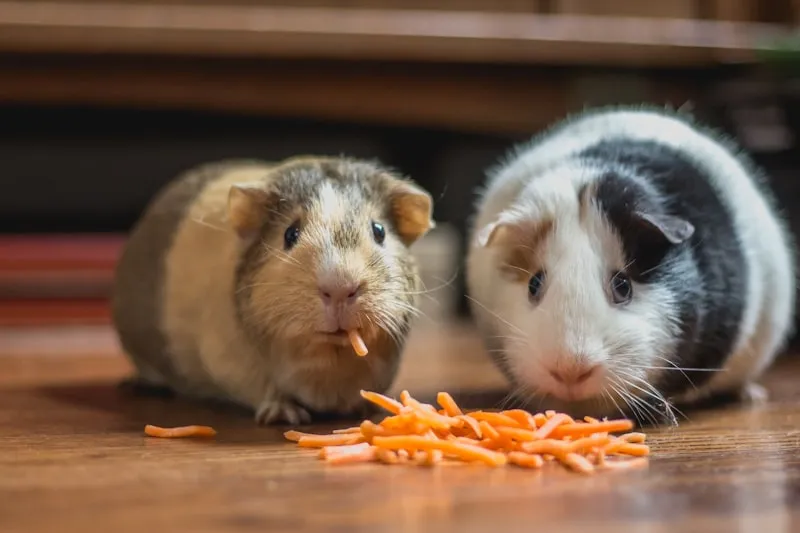
Coccidiosis — Eimeria spp.
Bloody diarrhea, dehydration, rapid weight loss. Common in intensive farming, especially in young poultry.
- Coccidiostats in feed. Housing hygiene. Live vaccination.
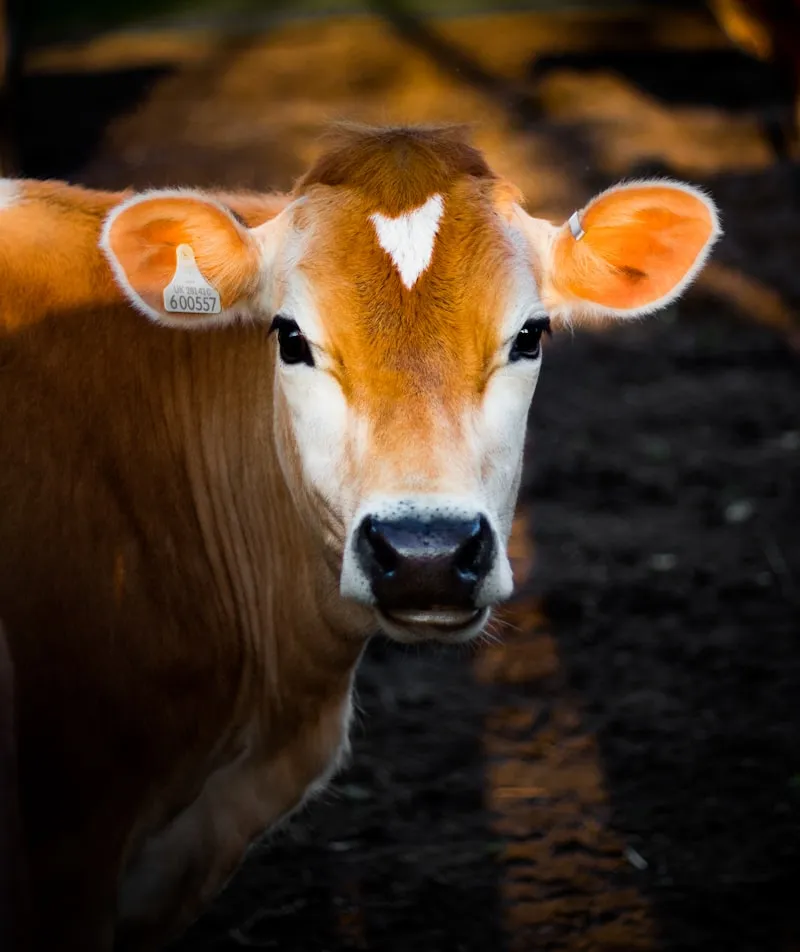
Mange — Sarcoptes / Psoroptes
Intense itching, scabbing, hair loss. Highly contagious. Progressive weakening if untreated.
- Injectable Ivermectin. Parasiticidal baths. Isolation of affected animals.
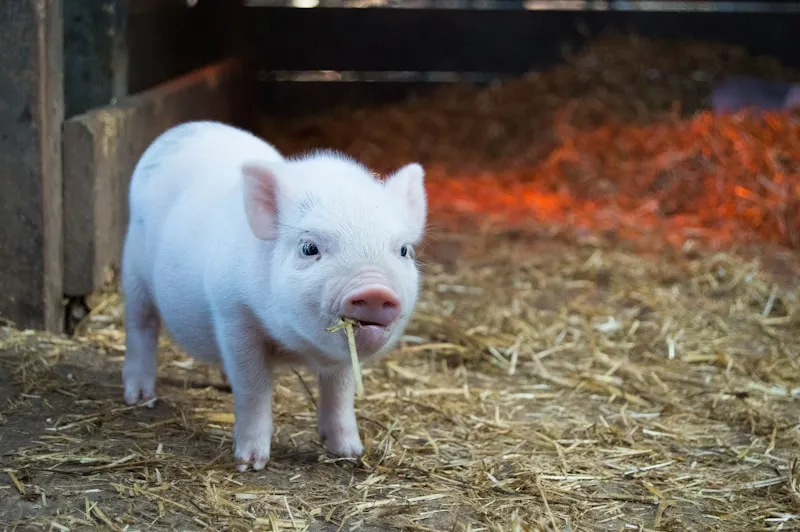
Mastitis — Udder infection
Swelling of the teat, abnormal milk (clots, blood), fever. Reduces milk yield and contaminates the herd.
- Intramammary antibiotics. Intravenous treatments. Milking hygiene.
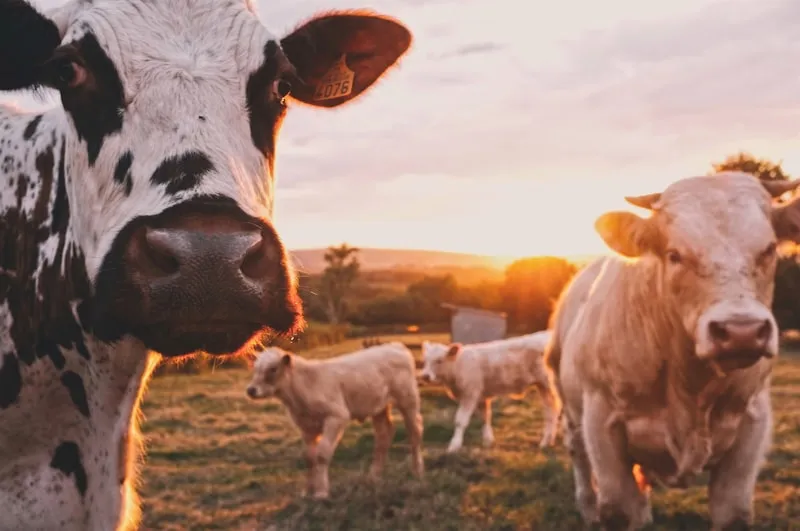
Internal Parasitism — Intestinal worms
Weight loss, diarrhea, anemia, rough coat. Very common in grazing. Reduces immunity and increases susceptibility to secondary infections.
- Quarterly deworming. Pasture rotation. Regular coproscopy.
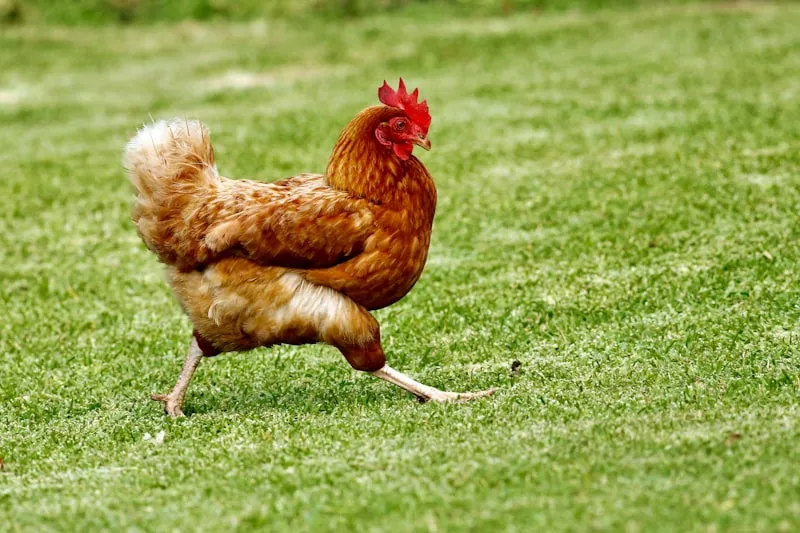
Vitamin A Deficiency — Hypovitaminosis A
Night blindness, stunted growth, lowered resistance to infections. Common in poultry fed exclusively on corn.
- Vitamin A supplementation. Include broad beans, liver, carrots in the diet.